Free Calculator for Email Open Rates
Do your subscribers open your email campaigns and newsletters? Use our free email open rate calculator to determine your current open rate.
Begin with a free trial
What exactly is the email open rate?
The email open rate is the frequency with which subscribers open emails sent to their inboxes. You may find your email open rate using the following equation:
Email opens / total emails sent = email open rate
Email open rate and click rate provide information on how frequently and how much subscribers interact with your email campaigns or newsletters. The open rate reflects how frequently people open email content, whereas clicks represent how often they click links within the opened message.
What is an appropriate email open rate?
A good email open rate is usually around 20 to 25%, depending on your industry. This means that out of every 100 people you email, about 20 to 25 actually open your message. According to Mailchimp’s 2022 report, the average across all industries was 21.33%, which is a solid benchmark for most email campaigns.
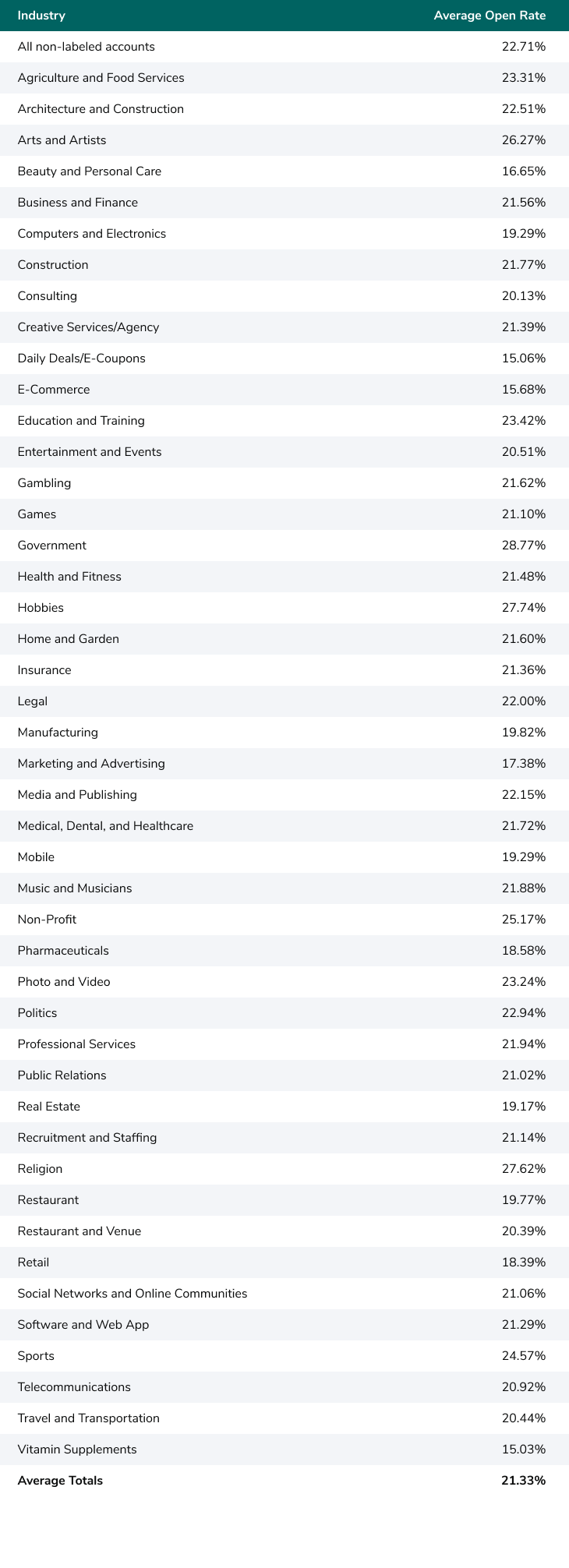
Open rates can differ a lot depending on what you’re offering and what kind of content you send.
Emails that are personal or sensitive usually get opened more. For instance, government-related emails tend to have the highest open rates. Newsletters about hobbies or personal interests also perform well. On the other hand, emails from retail, software, or food businesses often see open rates around 21% or lower.
A study from Constant Contact also showed that open rates can be higher during certain months. These consistent trends support the idea that email marketing is still one of the best ways to get a strong return on investment, with the industry expected to pass $10 billion in 2023.
How to Use Our Email Open Rate Calculator
It helps you figure out your open rate by comparing how many emails you sent with how many were opened. You can find these numbers in the campaign summary provided by your email platform.
To use it, just follow these steps:
1. Enter the number of emails you sent. This is usually the total number of people on your email list.
Make sure to check your bounce rate too. If some emails didn’t reach the inbox, they can’t be opened, so they shouldn’t be counted.
Your email platform will usually give you all this information in your campaign report.
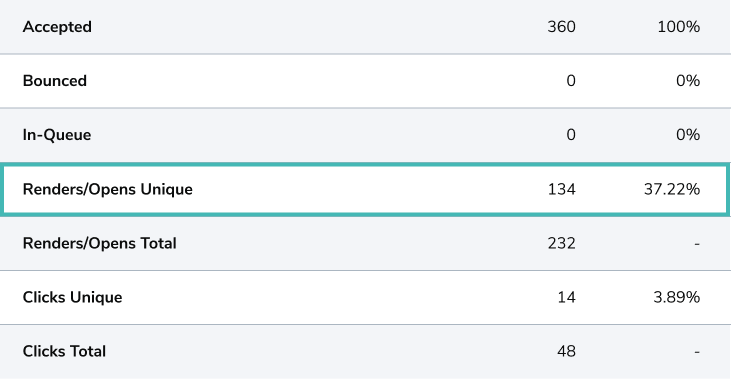
Make sure you count unique opens, not total opens.
This way, you are only counting each person once, even if they opened the email multiple times.
In this example, the campaign had a 100% delivery rate, so 360 emails were successfully sent. Type that number into the first box.
2. Next, enter the number of unique opens from your campaign report. This tells you how many different people opened the email.
3. Click the "Calculate" button to see your open rate.
Viewing your email's open rate results
After the calculation is completed, your email open rate will be displayed below the tool.
In addition to your open rate percentage, we'll tell you if your current open rate is suitable using the following text:
"Your email open rate is good."
"Your open rate is below average, and there could be issues with your email list."
According to industry norms, anything above 20% is a decent email open rate. Anything less than a 20% email open rate is unacceptable.
Let's look at what could be causing bad email open rates.
Why are email open rates so low?
If fewer than 20% of your contacts open your emails, there could be a variety of causes.
Boring subject lines
47% of email users choose to open or dismiss an email based only on its subject line.
This is especially true for active email users, who receive hundreds of emails each week. These people must swiftly distinguish between vital information and overly-promotional fluff, and they are prone to skipping anything that falls flat.
Make sure your subject line is short, entertaining, and gets to the topic.
Unclear email content
Being consistent is key to keeping your email marketing on track. This includes how often you send emails and how valuable the content is.
People like routines. That is why uit is a good idea to choose a regular schedule that matches when your audience is most active. If you stop sending helpful or engaging content, your subscribers may lose interest or forget about your brand. On the flip side, sending too many emails can annoy people and lead to spam reports.
It’s also important to keep your email quality high. If your open rates are dropping, your content might not be hitting the mark. Take time to review your emails with your team and ask your readers what they’d like to see more of.
Problems with preheader text
Preheaders, or preview text, are the line of text that appears right after the subject line of your email.
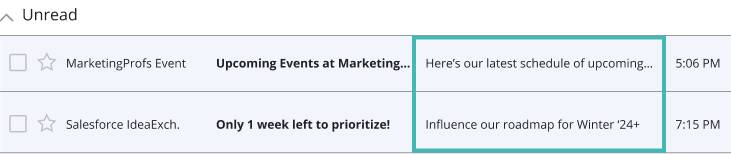
Preheaders are a good way to highlight the value of your email content.
When used well, preheader text is a powerful tool for email marketing. Just like the subject line, it can give readers a sneak peek of what is inside and encourage them to open the email. You can use it to add more details, create a sense of urgency, or highlight something important they will find inside.
If you do not optimize your preheader, it will often pull random content from the email body, which can look messy, unprofessional, or even spammy.
Take time to craft a good preheader to boost your email open rates and make your emails more effective.
Undelivered emails
Though this possibly does not affect your current open rate, bounced messages can be a significant effect. Subscribers cannot open emails that they do not get.
If you see a sharp drop in email openings, look into your bounce rate. Issues with content, SMTP configuration, or email deliverability can prohibit readers from opening your emails.
How to monitor open rates for email marketing
To see how many people are opening your emails, jus check your email service provider (ESP). If you are using platforms like Mailchimp or SendGrid, they will show open rates for each campaign or newsletter you send.
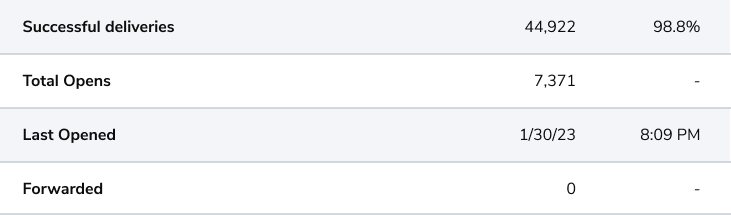
Mailchimp displays successful deliveries, opens, and forwards for each campaign.
The campaign overview usually includes useful stats like how many people opened the email and clicked on links. For more details, you can look at the full report to learn when people opened your emails and how often they interacted with them.
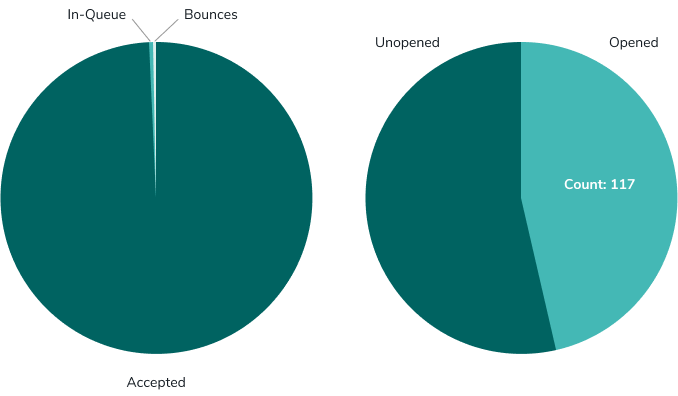
Examine your email campaign and newsletter open rates using your email service provider (ESP).
When in confusion, recall this formula:
Email opens / total emails sent = email open rate
How to Improve Your Email Campaigns Using Open Rates
Tracking your email open rates can help you understand what’s working and what needs improvement. If your emails are getting more opens than the industry average, that’s a good sign your content and timing are on point, keep going with what’s working, but still look for ways to do even better.
If your open rates are lower than average, it is time to adjust your approach. Try new subject lines, better timing, or different content to grab your audience’s attention and increase engagement.
Tip 1 - Split your email list into smaller groups
Sending one generic email to everyone doesn’t work well anymore if you want higher open rates. People expect a more personal experience—even in their inbox.
Break your email list into smaller groups based on things like interests or location. This way, you can send messages that feel more relevant to each group.
According to a study by Mailchimp, doing this can improve your open rates by over 14%.
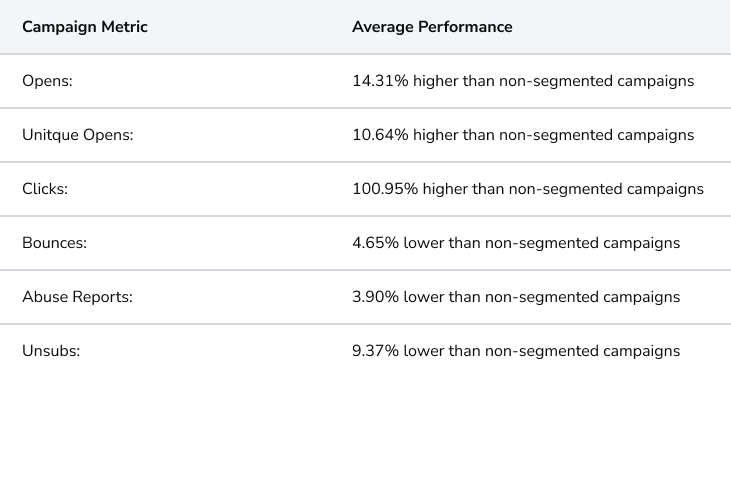
Mailchimp explains how list segmentation improves email marketing open rates.
Although your product or service may benefit a large number of people, not all subscribers have the same background, hobbies, income, or career. Finding the best ways to segment your audience into groups provides your marketing team with more usable data for developing effective email subject lines, messages, and offers.
Tip 2 - Personalize your emails to get more opens
People receive hundreds of marketing emails every week and month. Let's face it: neither you nor I want to spend a lot of time scrolling through uninteresting content designed to reach the most people.
What does work, however, is a message that is warm, personal, and different from what you would expect from a typical corporation. Let us look at an example.
“Hi &&first_name&& It's Brian Minick from FareOf. Thanks for joining us for the GetResponse webinar! Invalid or risky email addresses can impact any brand... It just takes one spam trap or a few too many bounces to hurt your sender reputation. I want to make finding the inbox easy. Try out the FareOf email validator now - with 1,000 free credits.
Just hit Reply!
I'd love to hear feedback about your experience and any questions you have about the topics we covered.
Thanks again for joining me!”
Brian Minick
This follow-up email sent after a Thursday afternoon webinar had nearly a 50% open rate. So, what made it work?
- It started with the reader’s name
- It came from someone they recognized
- It respected their time
- It gave a quick recap of the webinar
- It included a special offer as a thank-you
- It encouraged them to share and stay involved
When you know who you are talking to, it is easier to write in a relaxed, friendly way. People are much more likely to engage when your email feels genuine and personal.
Tip 3 - Catchy subject lines and preheaders make a big difference
People get tons of emails every day and don’t have time to read them all. If your subject line and preview text don’t grab their attention right away, your email will probably be skipped.
Make sure both are clear, interesting, and give a reason to open. It’s your first chance to show the email is worth their time.

Chase's subject line and preheader are straightforward, encouraging you to read on.
To increase the open rate of your email campaigns, invest time creating subject lines and preheaders that make an attempt to reach out to the individual. What makes your email so important or worthwhile? Reduce that response to a concise, clear subject line that informs the reader.
The body of the text is important, but it means nothing if readers don't open your email.
Tip 4 – Clean your email list to improve open rates
Keeping your email list clean helps your messages reach real people. Email validation helps you spot fake, invalid, or risky addresses that can bounce or damage your sender reputation.
When you remove those bad addresses, more of your emails land in inboxes not spam folders. That means more people see and open your messages, which improves your overall performance.
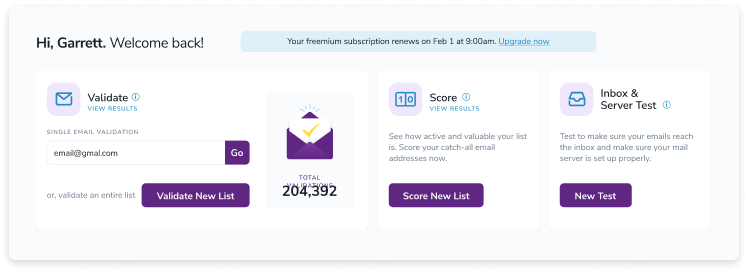
FareOf's new platform allows for faster validation of emails. To increase your open rate, clean up your email list.
Email validation using FareOf is quick, reliable, and inexpensive. Create a free account today, receive 100 free validation credits, and begin confirming the addresses on your list to increase your email open rates.
Use these free email deliverability calculators:
FAQs
The average email open rate across most industries is around 21%. Some sectors, like arts and hobbies, often see open rates above 25%, while others, like pharmaceuticals, usually fall below 20%.
Low open rates usually happen because of a few common issues, such as:
- Outdated or low-quality email lists
- Irregular sending times
- Unengaging or irrelevant content
- Subject lines that are dull or unclear
Yes, It costs money to send emails and use an email service provider. Email marketing is useless if subscribers do not open your messages. Also, low email open rates harm your sender reputation. If you often experience low open rates, other email servers may consider your content suspicious or unreliable. When this occurs, they may filter your emails or route them to the trash box, making email marketing even less effective.
The email open rate is measured as the number of emails opened divided by the number of emails delivered successfully.
While not completely accurate, analyzing your email open rate with your ESP is a useful way to monitor your marketing performance. Spam filters, privacy settings, and message size can all have an impact on delivery and inbox placement. To figure out if there is a problem with your email content, you must keep an eye out for notable changes in trends. To assess your performance, combine open rates with other useful metrics like clicks and click-to-open rates.
You can boost your email open rates by following a few simple tips:
- Clean your list by removing invalid emails
- Take out subscribers who aren’t engaging
- Stick to a regular sending schedule
- Group your contacts based on interests
- Focus on sending high-quality content
- Make your emails feel personal and friendly
Ready to see better email open rates? Sign up now
Begin with a free trialReceive 100 free email validation credits quickly