Email send time optimization tool
Are you wondering when to send emails for the best results? Even experienced marketers struggle to determine a suitable time.
Our email send optimization tool reduces the uncertainty by guiding you to identify the best times to increase open rates and engagement levels.
Begin with a free trial
Why your email list growth is essential
Our emails end time tool is quick, three-question survey designed to understand your brand and content. It asks few questions:
- Who are you emailing? (professionals or consumers)
- What type of content are you sending? (casual or business-focused)
- What industry are you in?
Your answers help determine the best time to send emails for your audience. We compare your responses with the latest data from 16 industries to suggest the most effective scheduling strategies for your business.
How to use your email send time suggestion
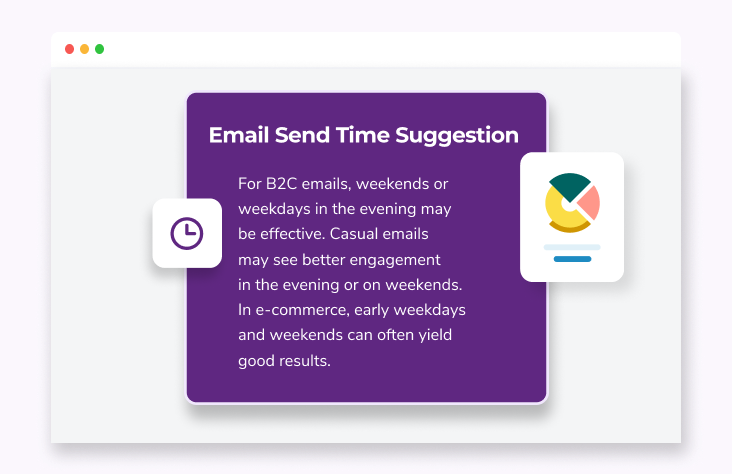
Once you complete the survey, you will get personalized email send time suggestions.
For example, if you are an ecommerce brand targeting consumers, evenings and weekends might work best. However, the ideal timing varies based on your specific audience.
Try different send times, track your results, and adjust as needed to maximize engagement.
When Is the Best Time to Send an Email?
The ideal send time depends on your industry and audience. But in general, weekdays perform best, especially tuesday to thursday.
Studies from brands like Mailchimp, HubSpot, and Experian show that mornings, especially around 11 am, tend to get the most opens and clicks. Engagement drops during lunch and early afternoon but picks up again later in the day.
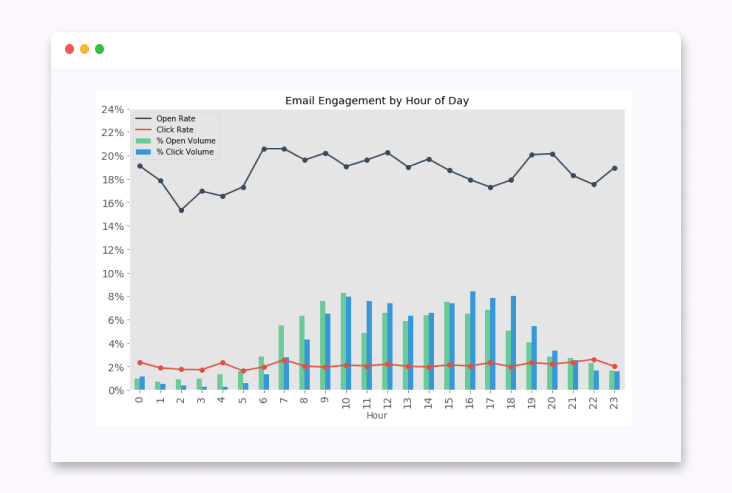
Peak email opens at 10 AM, and peak clicks at 4 PM - Source: Brevo
This makes sense, our 2025 inbox email statistics report shows that 80% of people check emails for work, and nearly half also look for promotions or personal messages. Many start their day by scanning emails before diving into work.
But mornings are not the only good time. Most people check their inbox multiple times a day, up to five times, so emails sent later can still get plenty of engagement. Click through rates often rise as the workday winds down.
Do you want to optimize your email timing? Check out the full report.
Check out the reportHow industry affects email engagement
Email timing depends on your industry.
B2B emails work best early in the week when professionals plan their tasks. Fridays are less effective since most people focus on finishing work before the weekend.
E-commerce emails perform well on tuesdays. Shoppers prefer to buy early in the week to avoid weekend shipping delays.
Why email timing is essential
Sending emails at the right time boosts open rates and clicks.
Your email’s success depends on when people see it. Even great subject lines and content can get lost if sent at the wrong time. For example, an email sent late on friday might be buried by monday.
Knowing when your audience checks their inbox helps you reach them when they are most likely to engage.
Do you want to see how your emails are performing? Try our free performance calculator.
Check your open rateImprove email deliverability
Optimizing your audience engagement helps ensure your emails reach inboxes.
Email deliverability means your emails land in a subscriber’s inbox, not just get sent. This is different from “delivery”, where some emails may end up in the spam folder.
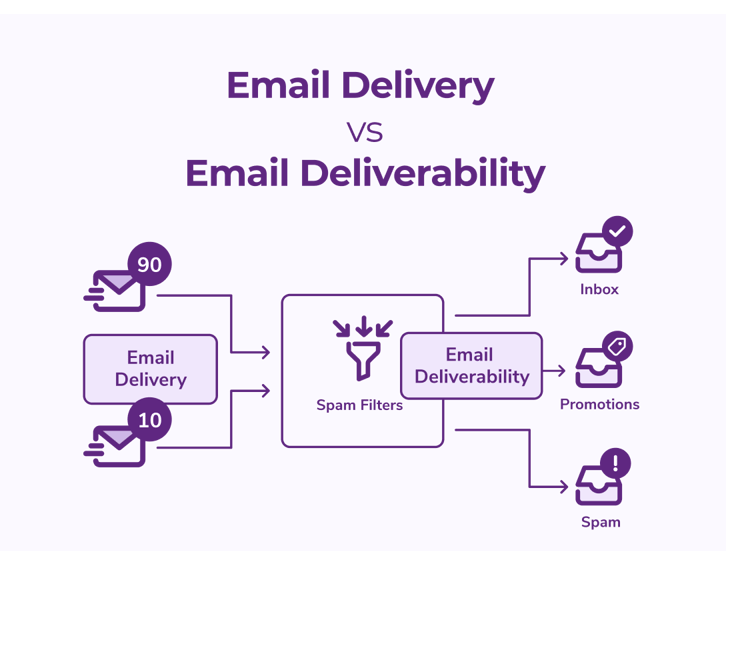
Low email engagement reduces your deliverability, if you do not use ideal email send times, your audience will not open or click your emails, and future emails will struggle to reach the inbox.
Increase your email marketing ROI
Timing matters when sending marketing emails.
People subscribe because they like your brand and want to engage. But they will only act if you reach them at the right time.
If you have a great promo, send it when your audience is most likely to see it. The right timing increases clicks and interactions. The wrong timing means your email migh t be ignored.
Discover the best time to send emails
There is no single perfect time to send an email. Different audiences respond differently, so results vary across industries and brands.
Our email send time suggestion tool helps you find the best timing based on similar businesses. From there, testing is key to understanding what works for your audience
The best time to send an email is when people engage. If your open and click rates are highest on saturday afternoon, that is your ideal send time.
FAQs
The best time to send an email is when your audience engages the most.
Weekdays between 6 am and 4 pm generally work well across industries, but your audience and industry matter too. The best approach is to test different times and adjust based on your results.
You can raise your email open rates by researching and testing the best email send times for your target group. Furthermore, use clear, attractive subject lines that tell the reader what your email offers and what they stand to benefit by opening it.
For better email engagement, consider scheduling, subject lines, email length, design, and a clear call to action.
Test multiple techniques on a regular basis and track your results to figure out which ones work best for your target audience.
You can send an email anytime, but for better open rates, avoid sending before 6 am. Early risers start checking their emails around this time, making it a good window to reach them.
You can send emails anytime, but late night emails may get less engagement.
Most people check emails the most around 4 pm, though some may take a final look after 8 pm. Test different times to see when your audience is most active.
Keep your emails from bouncing with FareOf
Sign up now and start verifyingReceive 100 free email validation credits quickly